





















How to Use Neem Oil for Face: A Step-by-Step Guide
Most people think natural means safe, but neem oil can sting if you’re not careful. In this guide you’ll learn exactly how to pick the right oil, test it, dilute it, and fit it into a daily routine without drama.
Step 1: Choose a High-Quality Neem Oil
Quality matters more than price when it comes to neem oil. The oil you buy should be cold‑pressed, unrefined, and clearly labeled as 100 % pure. Cold‑pressing keeps the fatty acids, antioxidants and antimicrobial compounds intact, which is why Ayurveda trusts it for skin care.
First, look for the words “cold pressed” or “expeller pressed” on the label. Those terms tell you the extraction used no heat or chemicals. A cold‑pressed batch will be thicker, darker, and have a stronger earthy scent. If the bottle looks pale and smells faint, the oil was likely refined and lost many of its benefits.
Second, check the country of origin. India is the traditional source for neem seed oil, and many reputable brands list the region on the bottle. A clear origin note signals that the supplier is proud of the supply chain.
Third, verify that the product lists any certifications. Organic certification is rare but valuable , it shows the trees were grown without synthetic pesticides. Even if a brand isn’t certified, a reputable company will still explain how the oil is harvested.
Why does this matter for your face? Neem oil is rich in linoleic and oleic acids that help balance the skin barrier. It also carries flavonoids and azadirachtin that fight bacteria and calm inflammation. If the oil is over‑processed, those actives degrade, and you lose the anti‑acne punch.
For more on why cold‑pressed oils are a skin‑care secret, read our deep dive on Cold Pressed Oils for Skin: The Secret to Radiant, Beyond-Organic Skin. That post walks through how the extraction method keeps the oil’s natural shield intact.
When you’ve found a reputable source, you’re ready for the next step.
Step 2: Perform a Patch Test
A patch test saves you from a nasty rash. Neem oil is potent, and a small amount can trigger contact dermatitis, especially on sensitive skin.
Here’s how to do it safely:
- Mix one drop of neem oil with one drop of a neutral carrier oil like jojoba.
- Apply the mixture to a tiny spot on the inner forearm.
- Cover with a bandage and wait 24, 48 hours.
- If the area stays calm, the oil is likely safe for facial use. If you see redness, itching, or swelling, dilute further or skip the oil.
Doctors note that neem oil can cause irritant or allergic contact dermatitis when applied undiluted. Health experts explain the warning signs and what to do if a reaction occurs.
Why a patch test matters for acne‑prone skin is simple: the skin on your face is thinner and more reactive. A tiny flare on your arm can become a full‑blown breakout if you ignore it.
When the test passes, you can move forward with confidence. If you need a gentle starter, try a half‑strength mix (one part neem, three parts carrier) for the first few applications.
Our brand’s philosophy of transparent sourcing aligns with this careful approach. See Our Approach for more on how we pick ingredients you can trust.
Step 3: Dilute Neem Oil with a Carrier Oil
Never slather pure neem oil on your face. The oil is thick and can clog pores if you use too much. Dilution makes it absorb better and tones down the strong scent.
Common carrier oils include jojoba, sweet almond, and rosehip. Jojoba mimics the skin’s natural sebum, making it a top choice for oily or acne‑prone skin. Sweet almond adds extra vitamin E, while rosehip brings a dose of vitamin A for brightening.
Here’s a simple dilution recipe you can adjust:
- 1 tsp cold‑pressed neem oil
- 4 tsp carrier oil of choice
- Optional: a few drops of lavender for scent
Mix in a small glass bottle, shake well, and store in a cool, dark place. The mixture stays fresh for up to six months.
Below is a quick reference table that shows which carrier works best for different skin types.
When you choose a carrier, think about your existing routine. If you already use a jojoba‑based cleanser, pairing it with a jojoba carrier keeps the ingredient list short.
For a deeper look at carrier‑oil chemistry, keep neem oil concentration under 10 % for facial use, as many experts recommend it stays safest for daily application.
Now you have a ready‑to‑apply blend.
Step 4: Apply Neem Oil to Your Face
Applying the blend is the fun part. You want enough product to cover problem areas without leaving a greasy film.
Follow these steps:
- Wash your face with a gentle, pH‑balanced cleanser.
- Pat skin dry , don’t rub.
- Dispense 2, 3 drops of the diluted neem oil onto your fingertips.
- Gently massage in circular motions over any blemish, redness, or uneven patches.
- Allow the oil to sink in for a minute, then follow with a light moisturizer if needed.
If you’re using the oil as a spot treatment, you can apply a single drop directly to a pimple and let it work overnight.
One online resource notes that neem oil’s fatty acids help restore the skin barrier while its antibacterial compounds keep acne‑causing microbes at bay.
Because neem oil can increase sun sensitivity, always wear sunscreen during the day if you’re using it in the morning.
Our Basic Face Care Duo pairs a gentle cleanser with a light moisturizer, making it easy to slot neem oil into an existing routine.
Once you’ve gotten the hang of the technique, you’ll notice less redness and fewer breakouts over a few weeks.
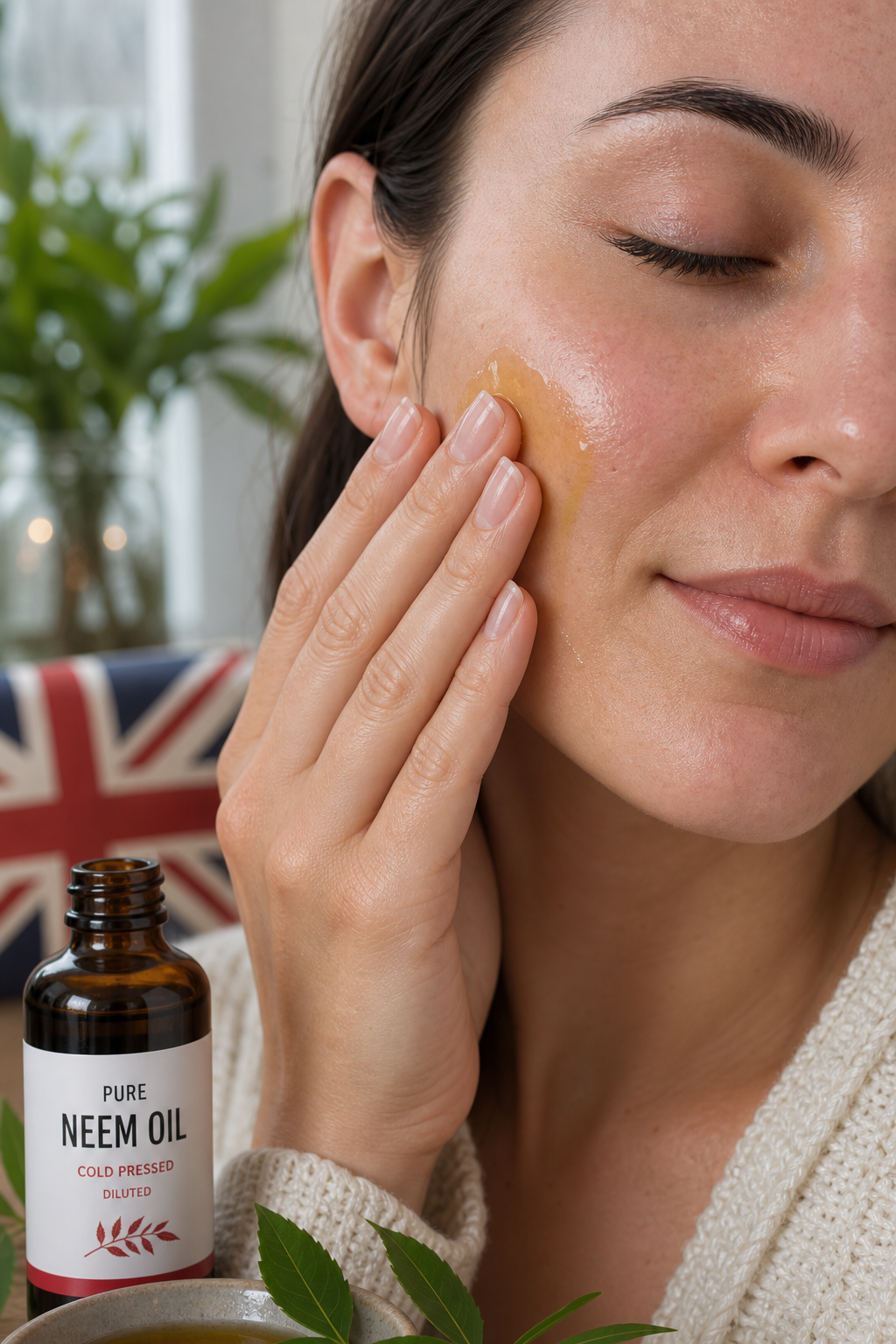
That visual cue helps you see the right amount and motion.
Step 5: Decide Between Leave‑On or Rinse‑Off
Neem oil can be used in two ways: as a leave‑on treatment or as a rinse‑off mask. Your choice depends on skin type and how much time you have.
Leave‑on works best when you want ongoing barrier support. Apply a thin layer after your serum and let it absorb overnight. This method is ideal for dry or mature skin that needs extra nourishment.
Rinse‑off is better for oily or acne‑prone skin that dislikes anything heavy. Mix a higher concentration (1 part neem to 2 parts carrier), apply for 5, 10 minutes, then wash off with a gentle cleanser. The short contact time lets the antibacterial compounds act without over‑loading the pores.
Here’s a quick decision matrix:
- Leave‑On:Nighttime, dry/mature skin, wants long‑term barrier repair.
- Rinse‑Off:Morning or quick routine, oily/acne‑prone skin, prefers a light feel.
Experiment for a week with each method. Track how your skin feels, looks, and reacts. If you notice extra shine or clogged pores, switch to the rinse‑off approach.
Our Antioxidant Night Oil is a great companion for a leave‑on routine, providing extra antioxidants without heaviness.
Remember, less is more. A thin film is enough for the oil to work.
Step 6: Incorporate Neem Oil into Your Skincare Routine
Now that you have the oil ready, think about where it fits in the larger routine.
Morning:
- Cleanser → Toner → Diluted neem (rinse‑off mask, 5 min) → Light moisturizer → SPF.
Evening:
- Cleanser → Serum → Diluted neem (leave‑on) → Antioxidant night oil → Sleep.
If you already use a serum with vitamin C, apply neem oil after the serum. The oil will lock in the actives and add its own anti‑inflammatory boost.
For acne‑prone skin, you can add a few drops of neem oil to your regular moisturizer once or twice a week. This keeps the barrier happy while still fighting bacteria.
When you travel, keep a small amber‑glass dropper bottle in your bag. The oil is stable for months if stored away from light.
Our brand’s philosophy of microbiome‑friendly formulas means that neem oil works well with our other products. Pair it with a gentle enzyme cleanser from the face moisturizers collection for a balanced routine.
Finally, listen to your skin. If you notice increased dryness, cut back the concentration. If you see fewer breakouts, you’re on the right track.
FAQ
Can I use neem oil if I have sensitive skin?
Yes, but always dilute it first and run a patch test. Sensitive skin reacts to the oil’s strong compounds, so start with a 1:5 ratio (one part neem, five parts carrier). If the skin stays calm after 48 hours, you can increase the concentration slowly.
How often should I apply neem oil to see results?
Start with two applications per week. Most people notice less redness and fewer pimples after about three weeks. If your skin tolerates it well, you can move up to daily use, but never more than once a day.
Is neem oil safe during pregnancy?
Research on pregnant users is limited, and many sources advise caution. If you are expecting, skip pure neem oil or stick to a very low dilution (1 drop in a tablespoon of carrier) and consult your dermatologist first.
Do I need to rinse off neem oil if I use it at night?
No. A thin leave‑on layer works overnight and helps the skin barrier recover while you sleep. Just be sure to follow with a light moisturizer if your skin feels tight.
Can I mix neem oil with other essential oils?
Yes. Adding a few drops of lavender or tea tree can soften the scent and boost antimicrobial power. Keep the total essential‑oil content under 2 % of the blend to avoid irritation.
What should I do if I get a rash after using neem oil?
Stop using the oil immediately. Gently wash the area with lukewarm water and a mild cleanser. Apply a 1 % hydrocortisone cream if itching persists, and consider an over‑the‑counter antihistamine. If the rash spreads or you experience swelling, seek medical help.
Conclusion
Neem oil can be a powerful ally for clear, balanced skin, but it demands respect. Choose a cold‑pressed, pure product, test it on a small patch, dilute it with a carrier that matches your skin type, and decide whether a leave‑on or rinse‑off approach fits your routine. By weaving the oil into a simple morning‑evening flow, you give your skin the antibacterial, anti‑inflammatory, and moisturizing boost it craves.
At OM Botanical Plant‑based Ayurvedic Skincare we blend ancient wisdom with modern science, so every bottle we recommend meets strict purity standards. When you follow this step‑by‑step guide, you’ll see fewer breakouts, calmer redness, and a smoother complexion without the guesswork.
Ready to try? Start with a tiny test, watch how your skin reacts, and then let neem oil become a regular, low‑maintenance part of your regimen.
Share