

Which Anti-Aging Skincare Products Are Best in 2026?
Table of Contents
- How to Choose the Best Anti-Aging Skincare Products
- The Best Anti-Aging Skincare Routine for Sensitive Skin
- The Best Ingredients for Fine Lines and Wrinkles
- Retinol Alternatives for Sensitive Skin
- How to Layer Anti-Aging Skincare Products
- How Much Do the Best Anti-Aging Skincare Products Cost?
- Frequently Asked Questions
Last Updated: October 14, 2026
How to Choose the Best Anti-Aging Skincare Products
Finding the best anti-aging skincare products starts with one question: what is your skin actually asking for?
Anti-aging skincare uses targeted ingredients and consistent daily habits to slow visible signs of aging, fine lines, wrinkles, loss of firmness, uneven tone.
Three things decide whether a product earns a place on your shelf:
- Ingredient quality and concentration. A short list of proven actives beats a long list of filler.
- Barrier compatibility. Harsh formulas trigger irritation, which accelerates visible aging.
- Consistency over intensity. Daily use of a gentle product outperforms occasional use of a strong one.
Most guides rank products by hype instead of tolerance. If your skin is reactive, the strongest serum on the market is worthless to you.
The Best Anti-Aging Skincare Routine for Sensitive Skin
The best anti-aging skincare routine for sensitive skin is a four-step sequence: gentle cleansing, antioxidant protection, hydration, and daily sun defense. Fewer steps mean fewer chances for irritation.
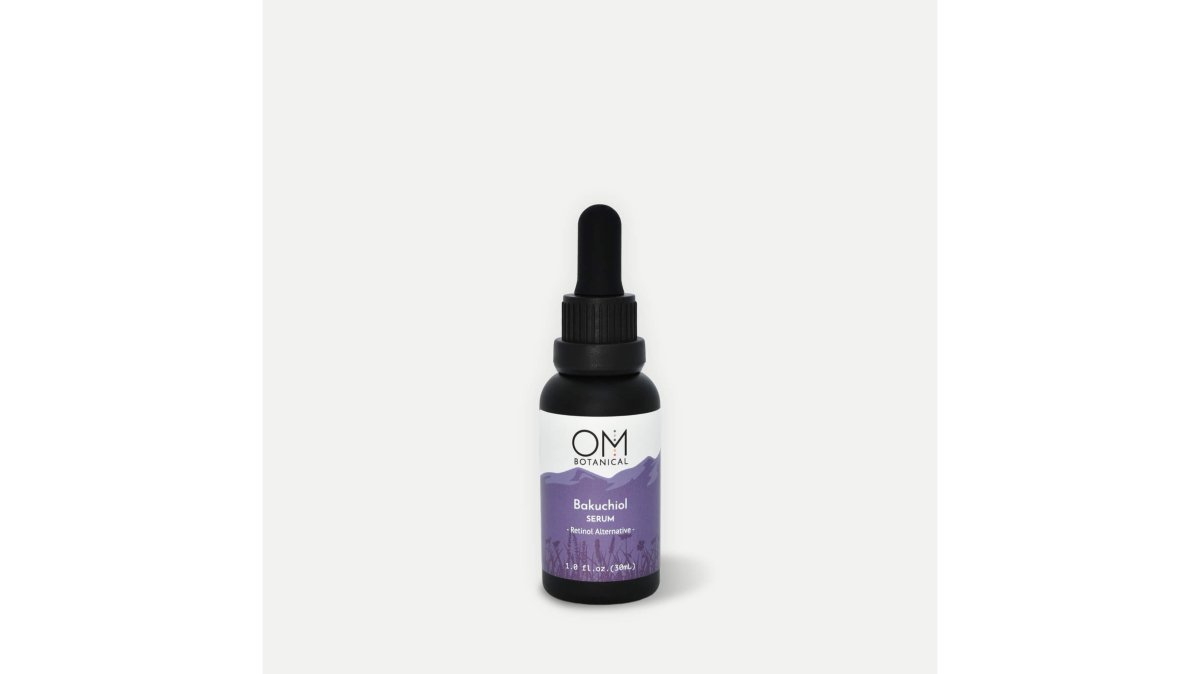
Bakuchiol Serum
A Simple 4-Step Routine
- Cleanse gently. Use a non-stripping cleanser that leaves skin soft, not tight.
- Apply an antioxidant serum. Vitamin C supports collagen and defends against daily stressors.
- Hydrate and seal. A moisturizer or facial oil reinforces the barrier overnight.
- Protect every morning. Broad-spectrum SPF 40 is non-negotiable, even indoors near windows.
If your skin stings within minutes of applying anything, strip back to cleanser, moisturizer, and sunscreen for two weeks before reintroducing actives one at a time.
The Best Ingredients for Fine Lines and Wrinkles
The best ingredients for fine lines and wrinkles fall into three groups: antioxidants that defend skin from daily damage, cell-turnover actives that stimulate renewal, and hydrators that plump skin from within.
Well-Supported Ingredients
Retinoids (retinol, retinal, adapalene, prescription tretinoin) and Bakuchiol. The most studied anti-aging ingredient class.
Vitamin C (L-ascorbic acid and stable derivatives). A well-supported antioxidant that defends against daily oxidative stress and improves uneven tone and dullness.
Niacinamide. Well-supported for barrier support, oil regulation, and improving uneven tone and enlarged pores.
Broad-spectrum sunscreen (zinc oxide, titanium dioxide, or chemical filters). The single most effective anti-aging step, because UV exposure is the largest driver of visible aging.
Alpha hydroxy acids (glycolic, lactic, mandelic). Well-supported for texture, dullness, and surface discoloration.
Hyaluronic acid. Well-supported as a humectant: it holds water in the upper layers of skin so fine lines look softer.
Ingredients With Moderate or Emerging Evidence
Bakuchiol. A plant-derived retinol alternative with growing research suggesting comparable visible improvements in fine lines and firmness over 12 weeks, with far less irritation (pubmed.ncbi.nlm.nih.gov).
Peptides. Short chains of amino acids that signal skin to support its own collagen and elastin.
Tremella mushroom. A plant-based humectant that holds water in the upper layers of skin, similar to hyaluronic acid but often with a lighter, less tacky finish.
Ceramides and ceramides rich cold pressed oils. Lipids that reinforce the skin barrier.
Exosome products.
Ingredients to Treat With Skepticism
Collagen in a jar. Collagen molecules are too large to penetrate intact skin.
Stem cells (plant-derived). Plant stem cell extracts can have antioxidant value, but they do not become human skin cells. Claims of "stem cell renewal" are not supported.
Growth factors. Interesting research area, but consumer formulas are largely unregulated, concentrations are rarely disclosed, and long-term safety data is thin.
Quick Reference
Ingredient |
Evidence |
Primary Benefit |
Best For |
How to Use |
|---|---|---|---|---|
Retinoids - Synthetic |
Strong |
Fine lines, texture, tone |
Non-sensitive skin, built up slowly |
Evening only, 2-3 nights per week to start |
Vitamin C + E + ferulic acid + rutin |
Strong |
Antioxidant defense, brighter tone |
Most skin types |
Morning or evening, after cleansing |
Niacinamide |
Strong |
Tone, barrier support |
Reactive, acne-prone skin |
Morning or evening |
Broad-spectrum SPF |
Strong |
Prevents UV-driven aging |
Everyone, daily |
Morning, last step |
AHA (glycolic, lactic, mandelic) |
Strong |
Texture, dullness, surface tone |
Non-reactive skin |
Evening, 1-2x per week |
Hyaluronic acid - Synthetic |
Moderate |
Plumping, hydration |
Dehydrated skin |
Morning or evening, under moisturizer |
Bakuchiol |
Strong |
Fine lines, texture, firmness |
Sensitive, retinol-averse skin |
Morning or Evening |
Peptides |
Moderate |
Firmness support |
Most skin types |
Morning or evening |
Tremella mushroom |
Strong |
Deep hydration, plumping |
Dry, dehydrated skin |
Morning or evening |
Ceramides |
Strong (barrier) |
Barrier reinforcement |
Dry, reactive skin |
Morning or evening |
Topical collagen |
Weak |
Humectant only |
Not a treatment |
As a moisturizer |
Plant stem cells |
Weak |
Antioxidant at best |
Not a treatment |
As a serum |
How Long Until You See Results
Realistic timelines matter, because most people quit before results appear.
- Hydration and plumping: days to two weeks.
- Brightness and tone: four to eight weeks of consistent vitamin C or niacinamide use.
- Fine lines and texture: eight to twelve weeks with harsh retinoids or safer bakuchiol.
If you see no change after twelve weeks of consistent use, the ingredient or concentration may not be the right fit.
How to Layer These Ingredients Without Irritation
Ingredient compatibility is where most routines fail. A few rules cover the common conflicts:
- Retinoids and AHAs/BHAs: Avoid if possible, do not use on the same night. Alternate evenings, or use the acid in the morning and the retinoid at night.
- Retinoids and vitamin C: fine in the same routine, but many people tolerate vitamin C in the morning and the retinoid at night better than layering them back-to-back.
- Vitamin C and niacinamide: the old "they cancel each other out" claim is outdated. Modern formulas and normal application timing make them compatible.
A Note on Skin Tone and Discoloration
Discoloration behaves differently across skin tones, and generic advice often misses this. Deeper skin tones are more prone to post-inflammatory hyperpigmentation, so aggressive acids or picking at breakouts can leave marks that last months (pubmed.ncbi.nlm.nih.gov). Gentler, slower options, niacinamide and consistent sunscreen, are usually the better first line. Lighter skin tones tend to show UV-driven discoloration and redness more readily, where vitamin C and daily SPF do more of the work.
Retinol Alternatives for Sensitive Skin
Retinol alternatives for sensitive skin deliver similar visible benefits without the peeling and redness that send many people running. Bakuchiol is the best-studied option, working on the same visible concerns: fine lines, texture, and firmness.
Advanced Age Defying set for 50s+ →
Our Bakuchiol Serum pairs bakuchiol with astaxanthin and antioxidant-rich botanicals in a nourishing oil base. For the delicate under-eye area, our Eye Cream with Peptides targets crow's feet and dark circles with plant peptides.
How to Layer Anti-Aging Skincare Products
How to layer anti-aging skincare products comes down to one rule: thinnest to thickest.
The order matters because thin formulas cannot penetrate an oil layer. Get the sequence wrong and your most expensive serum sits on top of your skin instead of absorbing.
Morning sequence:
- Cleanser
- Vitamin C serum
- Moisturizer
- Mineral sunscreen SPF 40
Evening sequence:
- Cleanser
- Hydrating serum
- Bakuchiol or treatment serum
- Facial oil or rich moisturizer
Wait about 60 seconds between steps. That gives each layer time to settle before the next one goes on.
How Much Do the Best Anti-Aging Skincare Products Cost?
Cost is where most anti-aging guides go quiet, and where readers make the most expensive mistakes. A $200 serum you stop using after three weeks costs more per real result than a $30 moisturizer you finish. Here's what you actually pay at each tier, how to calculate cost per use, and where spending more genuinely helps.
What You Pay at Each Budget Tier
Sets and bundles usually save 10% versus buying items separately.
Tier |
Cleanser |
Treatment serum |
Moisturizer |
Sunscreen |
Full routine |
|---|---|---|---|---|---|
Budget |
$8-$15 |
$12-$25 |
$10-$20 |
$10-$18 |
$40-$75 |
Mid-range |
$15-$30 |
$25-$60 |
$20-$45 |
$18-$35 |
$80-$170 |
Premium |
$30-$60 |
$60-$150 |
$45-$120 |
$35-$60 |
$170-$390 |
A complete, well-supported routine does not require the premium tier. The ingredients with the strongest evidence, sunscreen, vitamin C, and niacinamide, are available at every price point. What changes as you spend more is usually texture, packaging, fragrance, and formulation elegance, not the efficacy of the actives.
Cost Per Use: The Number That Actually Matters
Sticker price tells you almost nothing. Cost per use does.
The formula: Price ÷ (number of applications per container) = cost per use.
- A $40 serum used twice daily for two months (about 60 days, 120 applications) costs roughly $0.33 per application.
- A $120 serum used twice daily for two months costs roughly $1.00 per application, three times as much for a product that may not be three times as effective.
- A $24 sunscreen used every morning for three months (about 90 applications) costs roughly $0.27 per application, the cheapest anti-aging step you can buy, and the best supported.
Run this math before you buy. A product that feels expensive per bottle is often cheap per use, and one that feels affordable per bottle can be costly if you replace it every three weeks.
Where to Spend and Where to Save
Spend on:
- Sunscreen. Daily use is the single most effective anti-aging habit, and a formula you enjoy wearing is one you'll keep using. The worst place to cut corners.
- Your one treatment active. Whether a retinoid, bakuchiol, or well-formulated vitamin C, this is the product doing the visible work. Buy the best version you can tolerate.
- A moisturizer that suits your barrier. If your skin is dry or reactive, a barrier-supporting moisturizer makes every other active usable.
Save on:
- Cleanser. It's on your face for under a minute.
- Toners and essences. Rarely necessary, often the first step people cut when simplifying.
- Mists and "booster" products. Low concentration, high markup.
Cost Per Use of a Full Routine
Here is how our own lineup breaks down, with cost per use calculated on a twice-daily or daily-use basis over a typical container lifespan.
Product |
Price |
Best For |
Approx. Cost Per Use |
|---|---|---|---|
$24.00 |
Daily broad-spectrum protection |
~$0.27 (daily, 3 months) |
|
$40.00 |
Dark spots, uneven tone |
~$0.33 (2x daily, 2 months) |
|
$40.00 |
Rich hydration, wrinkles, elasticity |
~$0.33 (2x daily, 2 months) |
|
$40.00 |
Antioxidant defense, brightening |
~$0.33 (daily, 4 months) |
|
$40.00 |
Deep hydration, plumping |
~$0.33 (2x daily, 2 months) |
|
$50.00 |
Overnight repair, fine lines |
~$0.42 (nightly, 4 months) |
|
$55.00 |
Retinol alternative, texture |
~$0.46 (nightly, 4 months) |
|
$60.00 |
Crow's feet, dark circles |
~$0.33 (2x daily, 3 months) |
|
$132.30 |
Starting a full routine |
~$0.55 (full routine, 4 months) |
|
$231.30 |
Mature skin, complete regimen |
~$0.64 (full routine, 6 months) |
Cost-per-use figures are estimates based on typical container sizes and twice-daily or daily use. Your actual cost depends on how much product you apply per use.


Building a Routine at Three Budgets
Under $75 total. Gentle cleanser, a basic vitamin C serum, a ceramide moisturizer, and a mineral sunscreen. Skip the eye cream and treatment serum for now.
$80-$170 total. Add a treatment active, a retinoid or bakuchiol, and upgrade your sunscreen to one you genuinely enjoy wearing.
$170-$390 total. Add an eye cream, a hydrating serum, and a night oil or richer moisturizer. These are refinements, not requirements.
The Hidden Cost of Quitting
The most expensive anti-aging product is the one you stop using. Compare products on three numbers: price, cost per use, and how many weeks you'll realistically keep using it. The third number is the one most people forget, and the one that decides whether your routine works.
Frequently Asked Questions
What is the best product for anti-aging skin?
The best product depends on your main concern. For fine lines and wrinkles, a gentle retinol alternative like a bakuchiol serum can help. For dullness and dark spots, a vitamin C serum with ferulic acid supports collagen and evens tone. A rich moisturizer like Skin Food helps with dryness and firmness. A complete set, such as the Advanced Age Defying Set for 50s+, combines these steps for a full routine.
Can plant-based skincare help with signs of aging?
Yes, many plant-based ingredients have evidence for improving signs of aging. Bakuchiol has shown retinol-like benefits for fine lines without the irritation. Vitamin C from botanical sources supports collagen and protects against photodamage. Tremella mushroom is a natural alternative to hyaluronic acid for hydration. Plant peptides and antioxidants from oils like pomegranate and argan also help with firmness and skin barrier health.
How should you layer anti-aging skincare products?
Apply products from thinnest to thickest. Start with a gentle cleanser, then a hydrating serum like Tremella Mushroom Serum, followed by an antioxidant serum such as Vitamin C E Ferulic Rutin Serum. Next, apply a treatment like Bakuchiol Serum or Skin Glow. Follow with a moisturizer like Skin Food, and finish with sunscreen in the morning. Wait 30-60 seconds between steps to let each product absorb.
How long does it take to see results from anti-aging skincare?
Most people see initial hydration and glow within 1-2 weeks. For fine lines and wrinkles, expect 6-12 weeks of consistent use. Dark spots and uneven tone may take 8-12 weeks. Plant-based actives like bakuchiol work with less irritation. Take photos every two weeks to track subtle changes. Consistency matters more than using many products.
What is the best anti-aging skincare routine for sensitive skin?
A gentle routine for sensitive skin includes a non-stripping cleanser, a hydrating serum, a barrier-supporting moisturizer, and daily mineral sunscreen. Introduce active ingredients like bakuchiol or vitamin C slowly, starting every other day. Patch test new products on your inner arm for 24 hours. Avoid synthetic fragrances and harsh exfoliants. A set like the Basic Age-Defying Set for 30s to 50s simplifies this with compatible steps.
Share