
















Uses of Activated Charcoal for Skin: What It Actually Does
Key Highlights
-
Activated charcoal cleanses through adsorption: impurities stick to its porous surface and rinse away, rather than being pulled inside it.
-
Its best-supported cosmetic role is related to adsorption, making it useful in formulations designed to help remove excess oil and surface buildup.
-
How well activated charcoal performs depends heavily on the overall formulation, including the ingredients used alongside it.
-
Activated charcoal is most commonly used in rinse-off products, and frequency should depend on the formulation and your skin's tolerance rather than daily use by default.
-
OM Botanical builds charcoal formulas around botanical co-ingredients so the deep clean doesn't come at the cost of comfort.
Scroll through any skincare shelf, in a store or on a screen, and charcoal is nearly impossible to miss: soap bars, peel-off masks, cleansers, even shampoo. The category has grown fast enough that global spending on charcoal-based personal care products is expected to nearly double between now and 2035, from around $3.2 billion to $6.2 billion. That kind of growth usually means one of two things: the ingredient genuinely works, or the marketing around it has outpaced the science.
With activated charcoal, it's a bit of both. Some of what circulates about it, like claims that it pulls toxins from deep in your pores or that enough of it will shrink pore size permanently, doesn't hold up well against research. But its actual, provable function is still worth having in a routine, provided it's formulated with some care.
This is a practical look at the genuine uses for activated charcoal skin routines can benefit from, what charcoal isn't capable of, and how to tell a well-built charcoal product from one that's just riding the ingredient's reputation.
What Is Activated Charcoal?
Activated charcoal is a specially processed form of carbon, often made from materials such as wood or coconut shells. It undergoes controlled heating that creates millions of tiny pores throughout its structure, giving it a very large surface area. These pores allow certain substances to adhere to its surface through a process called adsorption.
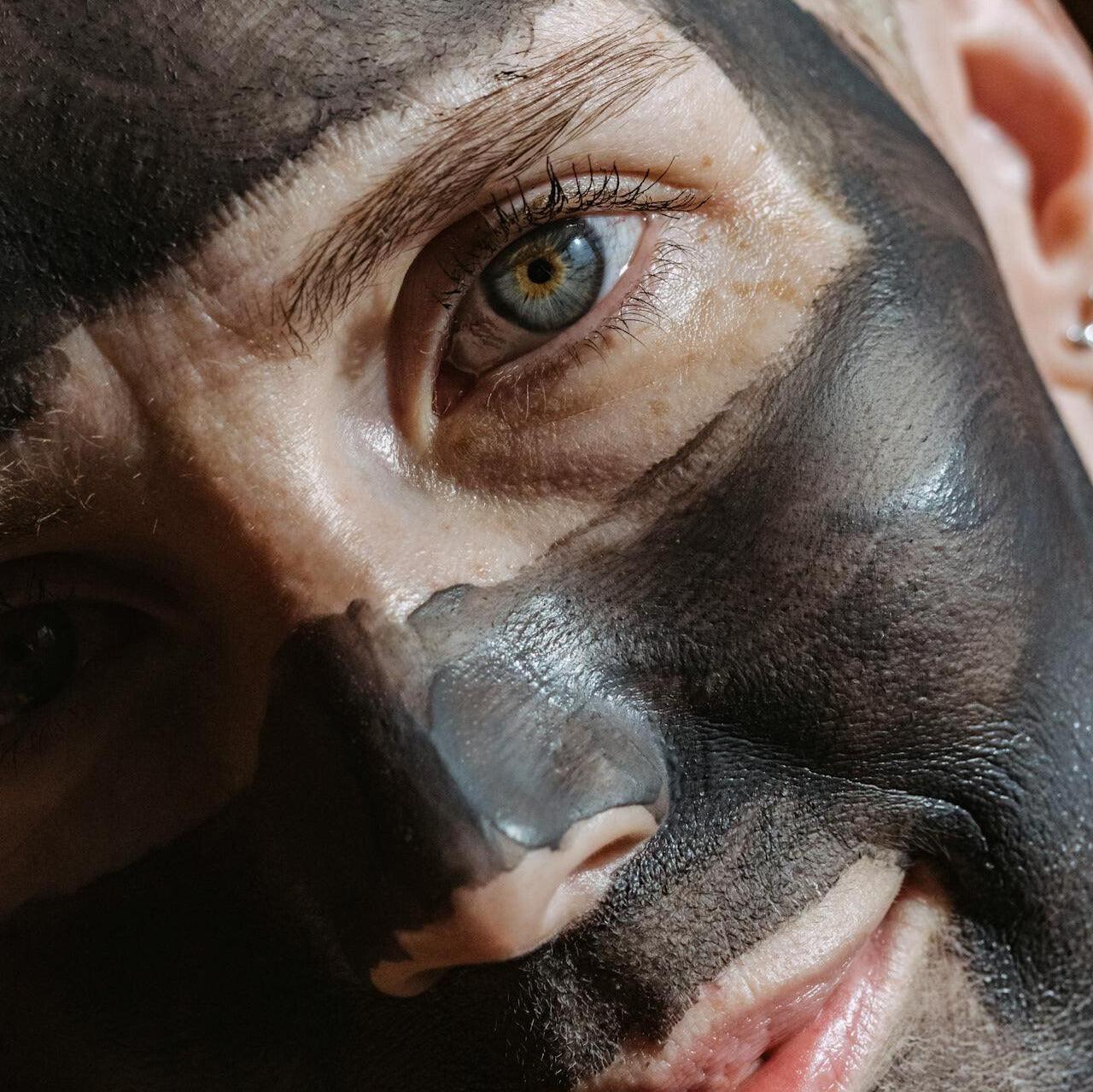
In activated charcoal skincare, this adsorptive property makes the ingredient useful in masks, cleansers, and other products formulated to help remove excess oil and surface impurities while supporting healthy skin.
It is important to distinguish adsorption from absorption: activated charcoal binds substances to its surface rather than literally drawing toxins out from deep within the skin.
This focus on how an ingredient actually works is central to how we formulate at OM Botanical. We follow the philosophy “If You Can Eat It, You Can Trust It on Your Skin,” favoring naturally derived, minimally processed ingredients whenever appropriate for topical use.
We also conduct consumer surveys to understand what people dislike or find lacking in mainstream skincare, and use those insights to develop formulations that address those real concerns. In other words, we consider not just whether an ingredient is popular, but whether it makes meaningful sense for the skin and the people using our products.
What Are the Uses of Activated Charcoal for Skin?

The effects of activated charcoal on skin are largely linked to its adsorptive properties. Unlike ingredients that chemically exfoliate or target a specific skin condition, activated charcoal allows certain substances to adhere to its highly porous surface.
This makes it particularly relevant in skincare products designed to manage excess oil, surface buildup, and congested-looking skin.
Here are some of the activated charcoal uses on skin:
1. Managing Excess Oil
One of the more logical uses of activated charcoal in skincare routines is helping manage surface oil. Activated charcoal has a highly porous structure with a large surface area, allowing it to adsorb certain substances that come into contact with it. In a face mask or cleanser, this may help reduce some of the excess oil sitting on the skin.
This can be particularly useful for oily or combination skin that tends to develop noticeable shine throughout the day.
2. Removing Surface Impurities
Activated charcoal is also used in cleansing products because of its ability to adsorb certain substances. When combined with the cleansing action of a face wash or mask, it may help lift away oil, dirt, makeup residue, and other surface buildup.
The distinction matters: activated charcoal isn't a magnet that pulls impurities out of the deeper layers of your skin. Its action is primarily associated with substances that come into contact with its surface.
3. Helping Reduce the Appearance of Congested Pores
Pores can appear more noticeable when they contain excess sebum and buildup. Activated charcoal clay masks may help remove some of this surface oil, which can make skin look temporarily cleaner and less congested.
However, charcoal shouldn't be confused with ingredients specifically designed to work within pores. For example, salicylic acid is oil-soluble and can penetrate into pores, whereas activated charcoal's primary role is adsorption at the surface. This makes charcoal more appropriate as a cleansing-support ingredient than a dedicated pore treatment.
4. Improving the Feel and Appearance of Congested Skin
After removing excess oil and surface buildup, skin may temporarily feel cleaner, smoother, and less greasy. This can be particularly noticeable when charcoal is used in a rinse-off mask.
This is primarily a cosmetic, short-term effect rather than evidence that charcoal is “detoxifying” the skin or removing accumulated toxins.
Curious whether charcoal really lives up to its skincare reputation? Take a closer look at the benefits of activated charcoal for skin and what it can actually do.
How Does Activated Charcoal Actually Work?
Activated charcoal begins as an ordinary carbon source, usually coconut shells, bamboo, or wood, burned at high heat with limited oxygen. That first step produces charcoal.
A second step, exposure to steam or specific gases, is what "activates" it: this etches the surface with an enormous number of microscopic pores, expanding its surface area dramatically. Even a small quantity of activated charcoal carries far more surface area than its size suggests.
That expanded surface is the whole mechanism behind how activated charcoal on skin actually cleanses. Charcoal works by adsorption, where particles bind to its outer surface, rather than absorption, where a material soaks something up internally the way a sponge takes on water. Oil, dirt, and other loose debris stick to those pores and lift away when the product is rinsed off.
At OM Botanical, we look beyond what an ingredient is famous for and focus on how it works within the complete formulation. Ingredient synergy is central to our approach: we thoughtfully combine complementary ingredients so each can support the others, helping deliver the intended benefits while maintaining the skin’s comfort and balance.
What Does the Evidence Actually Say About Charcoal?
Research into activated charcoal as a cosmetic ingredient is still developing, but there is growing interest in how its unique physical properties can be used in facial skincare. A 2022 study published in the Journal of Cosmetic Dermatology specifically investigated activated charcoal's effects on facial skin using high-resolution imaging, providing a more objective approach to evaluating its cosmetic applications.
The interest in charcoal also stems from its highly porous structure and strong adsorptive capacity. These properties give charcoal the ability to interact with substances such as oil and other materials on the skin's surface, which helps explain its popularity in purifying masks and cleansing formulations.
Research into carbon-based facial treatments has also explored improvements in skin texture, pore appearance, and acne-related concerns. A clinical study of carbon peel treatment reported improvements in skin appearance, pores, wrinkles, and acne lesions.
The relationship between activated charcoal and skin is largely based on charcoal’s adsorption properties. While carbon-based treatments combined with laser energy cannot be directly compared with everyday charcoal skincare products, they offer useful insight into how carbon may interact with surface oil and buildup.
Activated charcoal therefore has a credible functional basis in skincare, particularly for supporting cleansing and managing surface oil, rather than being positioned as a cure-all ingredient.
Wondering whether charcoal is suitable for sensitive skin? Take a closer look at what makes a skincare formula genuinely gentle and how to protect your skin barrier in our guide to the safest skincare brand for sensitive skin.
What Does a Well-Formulated Charcoal Mask Actually Look Like?

OM Botanical's answer to that question is the Charcoal Clay Detoxifying Mask, and the reasoning behind it comes down to what's paired with the charcoal, not just that charcoal is present.
-
Activated charcoal, kaolin, and bentonite clay work together to draw out impurities and excess oil, clear congested pores, and help prevent buildup that can lead to breakouts.
-
Willow bark extract handles gentle exfoliation, smoothing texture and evening out tone as it goes.
-
Witch hazel does double duty: it tightens the appearance of pores and calms redness and irritation, which is part of why the formula is positioned as suitable for even sensitive skin rather than just oilier types.
-
Kaolin clay also contributes a mineral-rich, soothing quality in addition to its oil-absorbing one, so the mask is meant to nourish while it purifies rather than to purify at the expense of nourishment.
The detail that says the most about how this formula was actually built, though, doesn't show up in the marketing copy. It's what comes first on the ingredient list: aloe vera leaf juice, ahead of the charcoal, ahead of the clays. Most charcoal masks lead with water or the charcoal itself and treat hydration as an afterthought, if it's addressed at all.
Here, it's the base the rest of the formula is built on, alongside jojoba oil and vegetable glycerin, so the deep clean doesn't come at the cost of the tight, over-dried feeling that's the most common complaint about this category of product. Radish root ferment filtrate, a naturally derived preservative, rounds out the formula in place of synthetic alternatives.
Shop the Charcoal Clay Detoxifying Mask
Does Your Routine Actually Need Activated Charcoal?
Charcoal isn't a routine essential, and it isn't a treatment for a specific skin condition, but it earns its place for certain situations more than others.
It's worth adding if you:
-
Want an occasional deep-cleansing step alongside your regular skin care routine
-
Live or work somewhere with heavy pollution or dust exposure
-
Exercise frequently or spend long stretches outdoors, where sweat and debris accumulate faster
-
Simply want an occasional deeper-cleansing step alongside your usual routine
It's worth approaching carefully if you have:
-
Sensitive skin, where a poorly balanced formula can push toward dryness or irritation
-
An active barrier issue, such as eczema flares, cuts, or irritation, where any deep-cleansing step is better paused until skin recovers
-
No prior experience with charcoal products, in which case a patch test before full use is the sensible first move
-
A prescription topical treatment in your current routine, worth checking with a dermatologist before layering charcoal on top
The common thread across both lists isn't charcoal's inherent riskiness. It's formulation quality. In practice, what matters more than charcoal concentration is how the ingredient is incorporated into the overall formulation.
A well-balanced formula can pair charcoal's cleansing properties with ingredients designed to support skin comfort, but individual tolerance can still vary. A poorly built one is where the dryness complaints come from, regardless of skin type.
Worried that deep cleansing could leave your skin feeling tight or irritated? Learn how to support a healthier skin barrier with gentle, Ayurvedic-inspired ingredients in our guide to repairing your skin barrier naturally.
Why Is OM Botanical's Approach to Charcoal Different?
Most charcoal products lean hard on the ingredient's reputation: one active, a "detox" claim on the label, and no real plan for what happens to your skin afterward. That's usually where trust breaks down, especially given how skeptical some dermatologists still are about charcoal's bigger claims.
At OM Botanical, we try to close that gap by starting with our customers, not the ingredient. Before we formulate anything, we survey people about what's actually gone wrong with their skincare, from tightness and dryness to ingredient lists nobody can read. We then use that feedback to build better formulations instead of simply chasing whatever's trending.
Our rule for any ingredient is simple: if it's clean enough to eat, it's probably a safe bet for your skin too. Charcoal earns its spot in our lineup because we understand how it actually works, not because it's having a moment. And it never works alone.
Every charcoal formula we make pairs it with botanicals that pick up the slack, hydrating and soothing so the cleanse doesn't cost you comfort.
Even the way our products look reflects this. Minimally processed botanicals shift in colour from batch to batch, and we don't smooth that out for a tidier label. The natural colour variation reflects the botanical ingredients used in the formula rather than an attempt to make every batch look artificially uniform.
Explore OM Botanical's full skincare collection.
Final Words
The hype around charcoal was never really about the ingredient. It was about wanting something to just work, for once, without an asterisk. Without the "avoid if you have dry skin" you skim past. Without the tightness you push through because the label promised a glow.
Charcoal doesn't need that story. It does one honest thing: pulls the day off your skin so a good cleanse can finish the job. Not detox. Not new pores. Just clean.
That's the version worth wanting. Skincare that cleans without punishing you for using it isn't a compromise. It's what charcoal should have been sold as all along, and it's the only version of it we'd put our name on.
Frequently Asked Questions
Does charcoal draw out toxins on skin?
Activated charcoal does not literally draw out toxins from skin. Its absorbent nature can bind certain surface substances, including excess oil and impurities, but this does not mean it detoxifies deeper skin tissue.
Can I use activated charcoal on my face every day?
Daily use is not necessary for most people. Activated charcoal can absorb much oil, and frequent application may leave skin feeling dry or tight. Follow the product instructions and adjust based on your skin’s response.
Does charcoal really remove blackheads?
Charcoal may help reduce the appearance of blackheads by absorbing excess oil and surface buildup. However, blackheads form when oil and dead skin cells accumulate inside pores, so charcoal alone may not completely clear them.
How often should I use activated charcoal products on my skin?
Frequency depends on the formulation and your unique needs. A charcoal face mask can generally be used occasionally rather than daily. Start slowly, follow the product instructions, and watch for dryness, irritation, or other adverse effects.
Is activated charcoal a natural ingredient?
Activated charcoal is derived from carbon-rich materials such as wood or coconut shells and is processed to increase its porous surface area. Whether it is appropriate for skincare depends on how it is processed and formulated into the finished product.
Is activated charcoal good for skin?
Activated charcoal can be beneficial for skin when used appropriately, particularly for removing excess oil and surface impurities. Activated charcoal powder uses for skin include masks and cleansers designed to support a cleaner, less congested complexion.
What makes OM Botanical’s Charcoal Clay Detoxifying Mask different?
Our Charcoal Clay Detoxifying Mask combines activated charcoal with kaolin and bentonite clay, willow bark extract, witch hazel, aloe vera, jojoba oil, and vegetable glycerin to cleanse while helping maintain skin comfort.
Why does OM Botanical use activated charcoal in this mask?
We use activated charcoal for its adsorptive properties, pairing it with complementary botanical ingredients rather than relying on charcoal alone. This helps us create a formulation designed to remove excess oil and buildup without making cleansing the only focus.
How does OM Botanical formulate charcoal skincare differently?
We start with consumer feedback rather than ingredient trends. Our formulations are guided by our “If You Can Eat It, You Can Trust It on Your Skin” philosophy, using naturally derived, minimally processed ingredients and combining them thoughtfully to address real skincare concerns.
Share