

















Vitamin E Benefits for Skin: Is It Good for You?
Key Highlights
-
Vitamin E is a fat-soluble antioxidant that helps neutralize free radicals generated by UV exposure, pollution, and other environmental stressors.
-
It supports the skin barrier and helps lock in moisture, making it especially useful for dry or mature skin.
-
It has anti-inflammatory properties that can help calm redness and irritation.
-
Vitamin E can complement other antioxidants, particularly vitamin C and ferulic acid, in well-designed formulations.
-
People with oily or acne-prone skin may prefer lightweight vitamin E formulations, while richer products can feel heavier on the skin.
-
At OM Botanical, we lean on ingredient synergy rather than isolating any single antioxidant, including vitamin E, to work alone.
You've probably seen vitamin E listed on the back of countless skincare products, and there's a good reason it appears so often. Vitamin E is a well-known, fat-soluble antioxidant that has been used in skincare for its ability to support the skin barrier, help protect against oxidative stress, and complement other skin-supporting ingredients.
But seeing "vitamin E" on an ingredient list doesn't tell you everything about what the finished product will actually do. The form of vitamin E used, its concentration, the ingredients it is paired with, and the overall formulation can all influence how it behaves on the skin. A lightweight serum containing vitamin E can offer a very different experience from a rich oil or cream, even though both feature the same ingredient.
That's why understanding vitamin E means looking beyond the ingredient name itself. Here's what the evidence says about vitamin E for skin, the benefits it may offer, who may find it useful, and how to incorporate it into a skincare routine in a practical way.
What Is Vitamin E?
Vitamin E is a group of fat-soluble compounds with antioxidant properties. The group includes several forms, including tocopherols and tocotrienols.
Tocopherol is one form of vitamin E commonly used in skincare formulations, where it can help support the skin barrier and protect against oxidative stress.
Using vitamin E oil for skin is one of the most common ways to apply it topically, since its fat-soluble nature absorbs well and works particularly well alongside other oils and lipid-based ingredients. In skincare, it's valued for conditioning the skin, neutralizing free radicals, and supporting the skin's natural barrier.
What Are the Main Benefits of Vitamin E for Skin?

So what does vitamin E do for your skin exactly? Its reputation comes down to a handful of genuinely useful properties, each backed by different mechanisms. Here's what it actually does.
1. It Protects Against Free Radical Damage
Vitamin E helps neutralize free radicals generated by UV exposure and other environmental stressors. Because it is fat-soluble, it is particularly relevant to protecting lipids from oxidative damage.
One study tested a topical antioxidant combination containing 15% vitamin C and 1% vitamin E and found that the combination provided greater protection against UV-induced damage than either antioxidant used alone.
This is closely aligned with OM Botanical's ingredient-synergy philosophy. Rather than expecting one antioxidant to do everything, we formulate with complementary ingredients that can support the same skin goals.
2. It Supports the Skin Barrier and Locks In Moisture
Vitamin E helps reinforce the skin's natural moisture barrier, which is what keeps hydration in and irritants out. This is why it shows up so often in moisturizers aimed at dry or dehydrated skin. A stronger barrier means less water loss and a more comfortable, less reactive complexion.
3. It Has Anti-Inflammatory Properties
Vitamin E has antioxidant and anti-inflammatory properties. In an experimental topical study, a formulation containing 0.1% α-tocopherol reduced dermal TNF-α expression by 1.3-fold, suggesting an effect on inflammatory activity in the skin.
4. It Supports Skin Elasticity Over Time
Vitamin E helps defend the skin against oxidative stress while supporting its lipid environment and moisture barrier. By helping maintain these protective functions, it can contribute to skin that feels softer, smoother, and more supple over time. Consistent use in a well-formulated skincare product can help support the skin's overall appearance and comfort.
5. It Supports Skin Recovery and Overall Skin Appearance
Vitamin E supports the skin barrier and helps protect against oxidative stress, which can support skin recovery and overall skin health, particularly in the case of skin inflammation. However, it should not be considered a standalone treatment for scars, stretch marks, or hyperpigmentation.
Together, these benefits explain why vitamin E has stayed a skincare staple for decades rather than fading as a passing trend.
At OM Botanical, this is exactly why we formulate with it, not as a standalone claim on a label, but as one part of a formula built around ingredient synergy and a food-grade-inspired philosophy, so it's doing real work alongside ingredients chosen to support the same goals.
Who Should Use Vitamin E?
Is vitamin E good for your skin no matter your skin type? For most people, yes, though it genuinely shines for a few specific groups:
-
Dry or flaky skin: Vitamin E is a fat-soluble antioxidant that can also contribute conditioning and barrier-supporting properties in skincare formulations. It can help support the skin's lipid environment and reduce moisture loss, making vitamin E-containing formulas particularly useful for dry or dehydrated skin.
-
Mature or sun-exposed skin: It neutralizes free radicals generated by UV light and pollution, cutting down on the oxidative stress that speeds up fine lines and loss of elasticity.
-
Compromised or irritated skin barriers: It's genuinely good at calming redness and supporting the recovery of dry patches, minor scars, or general irritation.
-
Anyone using a vitamin C product: Pairing vitamin E with vitamin C and ferulic acid stabilizes the formula and meaningfully boosts the photoprotective benefit of daytime antioxidant products.
These are the situations where vitamin E earns its reputation most clearly. That doesn't mean everyone should reach for the same formulation, though.
Curious about how traditional Ayurvedic ingredients can work alongside modern skincare science? Explore how Ayurveda and science can come together for a more thoughtful skincare routine.
Who Should Be Cautious?
Vitamin E isn't universally suited to every skin type or every formulation. A few situations call for more care:
-
Oily or acne-prone skin: Vitamin E isn't inherently comedogenic, and how a product feels or performs on oily skin depends on the overall formulation. If you prefer lightweight skincare, a serum or lighter cream may feel more comfortable than a richer oil-based formula.
-
Very sensitive or reactive skin: While vitamin E is usually soothing, it can occasionally act as an allergen and trigger contact dermatitis, redness, or itching in some people. Patch testing a new formulation is always worth doing first.
-
Multi-step layering routines: If you're layering multiple products, follow the directions for each formula and generally apply lighter products before richer creams or oils.
If you're looking beyond individual ingredients and want to understand what goes into the products you put on your skin, take a closer look at why what you feed your skin matters and how your skincare choices can shape your overall routine.
Does Vitamin E Work Better With Other Ingredients?
Vitamin E doesn't have to do all the work on its own. In a well-formulated skincare product, it can complement other antioxidants and skin-supporting ingredients, which is why you'll often see it alongside ingredients such as vitamin C and ferulic acid.
Vitamin C and vitamin E each provide antioxidant support, while ferulic acid can help support the overall antioxidant system. It’s a good example of why looking at the whole formula can tell you more than looking for one familiar ingredient on the label.
The takeaway? The presence of vitamin E matters, but so does everything around it. A thoughtfully designed formula can combine vitamin E with antioxidants, emollients, and botanical ingredients to support several skin needs at the same time.
That's also how we approach formulation at OM Botanical. Rather than asking one hero ingredient to do everything, we look at how complementary ingredients can work together to create a more balanced formula.
If you're choosing skincare with sensitive or easily reactive skin in mind, it's worth looking beyond individual ingredients and considering the formula as a whole. Explore what makes a skincare brand a safer choice for sensitive skin.
How Do You Incorporate Vitamin E into Your Skincare Routine?

Getting the benefit from vitamin E has less to do with finding one perfect product and more to do with where and how you use it. A few practical guidelines make a real difference:
-
Choose a format that suits your skin's needs. Consider what you want the product to help with, whether that's dryness, barrier support, antioxidant protection, or overall conditioning. The texture and formulation should feel comfortable for your skin and fit easily into the rest of your routine.
-
Layer it according to the formula. There’s no universal rule that vitamin E products belong at the end of your routine. Follow the product directions and consider its texture, whether you're using a lightweight serum, cream, or oil, when deciding where it fits alongside the rest of your skincare.
-
Pair it with another antioxidant. As covered above, vitamin E works better alongside ingredients like ferulic acid than on its own.
-
Use it consistently, not occasionally. Antioxidant protection and barrier support build up over time with regular use. Occasional use won't produce the same results as daily use.
-
Patch test anything new. This matters more with vitamin E than some ingredients, since a small number of people do react to it, even though it's generally well tolerated.
The simplest way to think about it: vitamin E is a supporting ingredient, not a standalone step. It works best folded into a routine that's already doing the basics well, cleansing, moisturizing, and protecting from UV, rather than added on top as a fix for something else.
Which OM Botanical Products Contain Vitamin E?
At OM Botanical, vitamin E appears as tocopherol in several formulas, but its role depends on what it is paired with. Rather than treating vitamin E as a standalone hero ingredient, we use it as part of formulas designed around specific skin concerns.
1. Vitamin C, E, Ferulic Acid, and Rutin Serum

This serum brings vitamin C, vitamin E, ferulic acid, and rutin together in one antioxidant-focused formula. Vitamin E is listed as tocopherol in the ingredient list, alongside the other antioxidant ingredients. The formula is designed to brighten, support firmer-looking skin, and help defend against environmental stress.
This is a particularly clear example of OM Botanical's ingredient-synergy philosophy: instead of relying on vitamin E or vitamin C alone, the formula brings several complementary antioxidants together.
2. Bakuchiol Serum

The Bakuchiol Serum is an oil-based formula built around bakuchiol, astaxanthin, squalene, and botanical oils. Its ingredient list also includes tocopherol (vitamin E). OM Botanical positions the serum around concerns such as fine lines, uneven texture, and loss of firmness, with the formula designed to provide a gentler alternative to traditional retinoids.
Here, vitamin E is one part of a broader blend of antioxidants and nourishing oils, rather than the ingredient responsible for the product's entire effect.
3. Antioxidant Night Oil
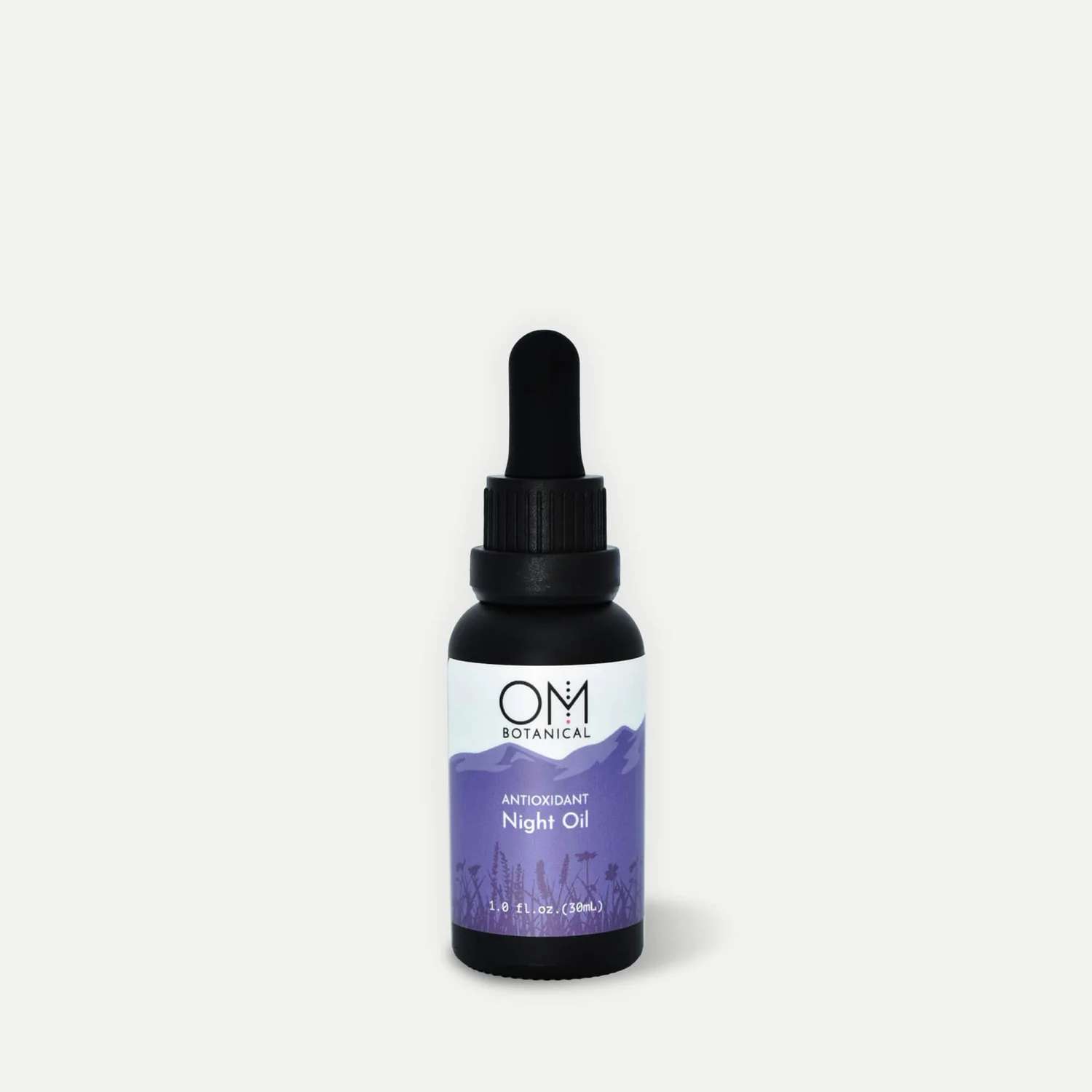
The Antioxidant Night Oil takes a richer, oil-based approach, combining antioxidant and conditioning oils with vitamin E. The product is part of OM Botanical's face oil collection and is designed to complement a nighttime skincare routine.
This formula shows another way vitamin E can fit into a skincare product: as part of an oil-rich blend where multiple ingredients contribute to conditioning and antioxidant support.
Across these three products, the common thread is formulation rather than a single hero ingredient. Vitamin E can be part of an antioxidant serum, an oil-based treatment, or a nourishing night oil, depending on what the rest of the formula is designed to accomplish.
That's central to the OM Botanical approach: the goal isn't simply to add vitamin E to a product. It's to consider what vitamin E contributes alongside the other ingredients and how the complete formula can support the skin's needs.
Why Should You Choose OM Botanical for Antioxidant Skincare?
At OM Botanical, we take a formulation-first approach to antioxidant skincare. Our food-grade-inspired philosophy focuses on minimally processed ingredients, natural color, and formulas built around ingredient synergy rather than a single hero ingredient.
You can see that approach across our vitamin E-containing products, where vitamin E is paired with complementary antioxidants, botanical oils, and other skin-supporting ingredients based on the purpose of each formula.
It's a simple idea: less unnecessary processing, thoughtful ingredient combinations, and formulas designed with the whole skin concern in mind.
Ready to give your skin antioxidant support that actually works together? Explore our ranges today.
Final Thoughts
Vitamin E isn't a miracle ingredient, and it was never meant to work alone. Its real value shows up quietly, over time, in skin that holds onto moisture a little better and bounces back a little faster from the world around it. Good skincare isn't about chasing one powerful name on a label. It's about giving your skin a few good things that know how to work together.
Frequently Asked Questions
What are the advantages of vitamin E for skin?
Vitamin E has antioxidant properties that help protect skin cells from environmental stressors. Topical vitamin E may support skin health, but scientific evidence for benefits such as skin aging and wound healing remains limited.
What should you not mix with vitamin E?
Vitamin E generally works well with most skin care products. If you have sensitive or oily skin, avoid layering multiple topical products that may irritate your skin. Always patch test new products before adding them to your skincare routine.
Is it good to put vitamin E on your face?
You can use topical vitamin E on your face, especially for dry skin. However, concentrated topical vitamin E oil may feel heavy or cause side effects. A formulated skincare product may be easier to incorporate.
Can I use vitamin E daily on my face?
You can use topical vitamin E daily as part of your skin care routine if your skin tolerates it. Choose a suitable concentration of vitamin E, patch test first, and follow the product directions. Stop use if irritation or other side effects develop.
Which OM Botanical products contain vitamin E?
OM Botanical uses vitamin E, listed as tocopherol, in its Eye Cream with Peptides, Bakuchiol Serum, and Antioxidant Night Oil, paired with complementary ingredients for different skincare needs.
Why does OM Botanical use vitamin E in its skincare products?
OM Botanical uses vitamin E as part of an ingredient-synergy approach, pairing it with complementary botanicals rather than relying on vitamin E as a standalone ingredient.
Which OM Botanical vitamin E product is right for my skin?
The Eye Cream with Peptides is formulated for the delicate eye area, the Bakuchiol Serum supports skin renewal, and the Antioxidant Night Oil combines vitamin E with antioxidant-rich oils for overnight skincare.
Share