



















11 Natural Remedies for Dry Winter Skin That Work
Winter's dry air pulls water right out of your skin, leaving it tight, flaky, and itchy. The good news? Most of what actually fixes it is sitting in your kitchen or your garden. Here are 11 natural remedies for dry winter skin, what each one does, and who it's best for.
1. OM Botanical Plant-based Ayurvedic Skincare (Our Top Pick)
OM Botanical Plant-based Ayurvedic Skincare is a plant-based brand that blends Ayurveda with molecular biology to make skincare gentle enough to use through the harshest winter. We're our own first pick for one reason: dry winter skin is usually a barrier problem, and our formulas are built to repair the barrier instead of just coating it.
Best for anyone who wants results without harsh actives. If you've tried thick drugstore creams and your skin still feels tight by noon, this is the swap.
Most "clean" creams sit on top of dry skin. We formulate with food-grade, cold-pressed oils and whole-plant extracts that feed the skin's microbiome, the community of tiny microbes that keep your barrier strong. Our products skip the fragrance, alcohol, and synthetic preservatives that crack skin further in winter. Every formula is vegan, cruelty-free, and made in small batches in Apex, North Carolina.
One thing we lean on hard: aloe vera as a base instead of plain water, plus tremella mushroom, a plant humectant that pulls moisture deeper than synthetic options without the sticky film. For dry climates, that matters more than people realize. If you're rebuilding a winter routine from scratch, start with our natural face moisturizers and add a hydrating serum underneath.
Honest caveat: we're a small-batch brand, so we don't carry the giant product range a mass retailer does. If you want a 12-step routine, that's not us. We believe simple beats complicated, especially in winter.
2. Cold-Pressed Natural Oils (Coconut, Jojoba, Almond, Olive)
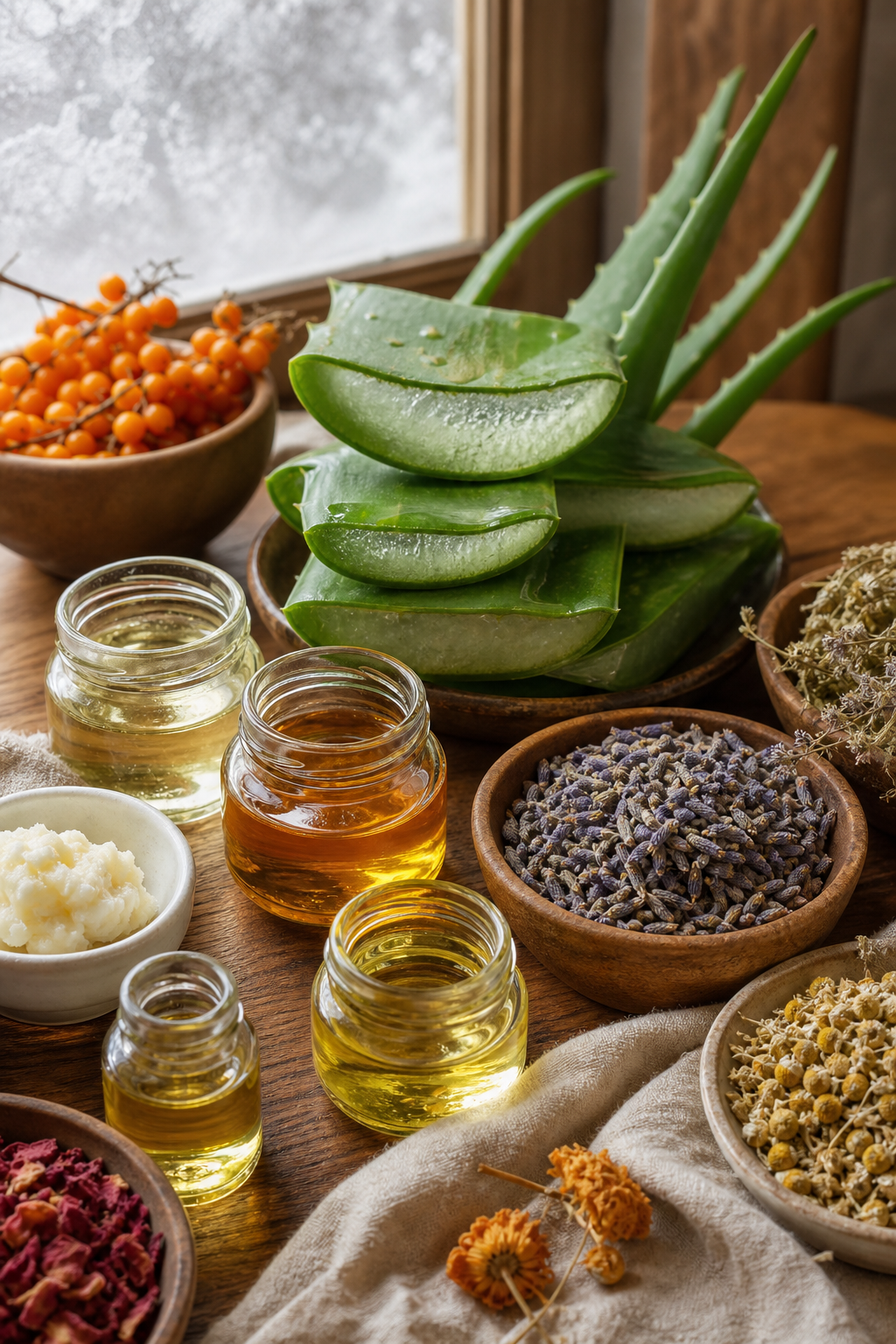
Cold-pressed oils are unrefined plant oils that lock moisture into the skin and feed it fatty acids. They're the simplest natural remedies for dry winter skin, and most people already own at least one.
Best for dry patches, rough elbows, and after-shower sealing. Coconut oil traps moisture and has mild antibacterial action. Jojoba mimics your skin's own sebum, so it absorbs fast and won't clog pores. Almond oil is high in vitamin E, which helps repair damaged skin, and it's gentle enough for sensitive faces. Olive oil brings antioxidants that protect against environmental damage.
Almond oil is also known for calming redness, which makes it a safe pick when other oils sting. The reason these work: they're emollients, meaning they soften and smooth the skin surface while slowing water loss.
The trick is application. Put a few drops on damp skin right after a shower, then massage in. That seals the water in instead of letting it evaporate into cold, dry air. Want to go deeper on which oil suits your skin type? Our guide on cold-pressed oils for skin breaks down the differences. To learn more about how cold pressing keeps nutrients intact, expeller and cold pressing extract oil without high heat or solvents.
One caveat: coconut oil is comedogenic for some people, so if you're acne-prone, stick to jojoba on your face.
3. Oatmeal Soothing Treatments for Irritated Winter Skin
Oatmeal calms itchy, inflamed winter skin and gently cleans without stripping it. It's one of the most soothing natural remedies for dry winter skin, especially when your skin is red and angry.
Best for itching, eczema-prone skin, and full-body dryness. Colloidal oatmeal (oats ground into a fine powder) has anti-inflammatory compounds plus saponins, which are natural cleansing agents. Aveeno's colloidal oatmeal bath treatment is built around this exact property.
The easiest method: grind a cup of plain oats in a food processor until powdery, then add it to a warm (not hot) bath. Soak 15 to 20 minutes. The oatmeal forms a thin film that holds moisture and quiets the itch.
You can also make a face mask. Mix three tablespoons of ground oats with a tablespoon of lemon juice, leave it on 15 minutes, then rinse. Our post on natural beauty solutions you can make at home walks through a few more of these.
A reminder for the bath: keep the water lukewarm. Hot water undoes the whole point by drying you out faster.
4. Raw Honey for Deep Hydration and Healing
Raw honey is a humectant, which means it pulls moisture into the skin and holds it there. It also fights bacteria, so it doubles as a healer for cracked winter skin.
Best for chapped, flaky spots and small cracks that won't heal. Honey draws water from the air into the top layers of your skin, then its antibacterial action keeps those little winter cracks from getting infected.
To use it, spread a thin layer of raw honey on clean skin, leave it 15 to 20 minutes, then rinse with warm water. That's the whole routine. You can also mix it into a mask with oats or yogurt for extra hydration.
This is exactly the kind of food-grade simplicity we build into our formulas at OM Botanical Plant-based Ayurvedic Skincare. Raw honey shows why whole ingredients often beat synthetic ones for everyday dryness.
One caveat: it's sticky, and it can be messy on the body. For large dry areas, an oil or butter is more usable. Save honey for the face and small patches.
5. Aloe Vera Gel to Calm and Replenish Moisture
Aloe vera calms redness and refills moisture without leaving skin greasy. It's one of the lightest natural remedies for dry winter skin, which makes it great for faces and sensitive areas.
Best for irritated, reactive skin and anyone who hates heavy creams. Aloe is loaded with polysaccharides, long-chain sugars that form a hydrating film and lock moisture in. It also has anti-inflammatory compounds that bring down redness fast.
Here's something most people miss: aloe is a natural prebiotic, meaning it feeds the good bacteria on your skin. That helps strengthen your barrier from the surface up. We chose aloe vera as the base of many of our products instead of plain water for this reason, and you can read why in our piece on aloe vera as nature's prebiotic.
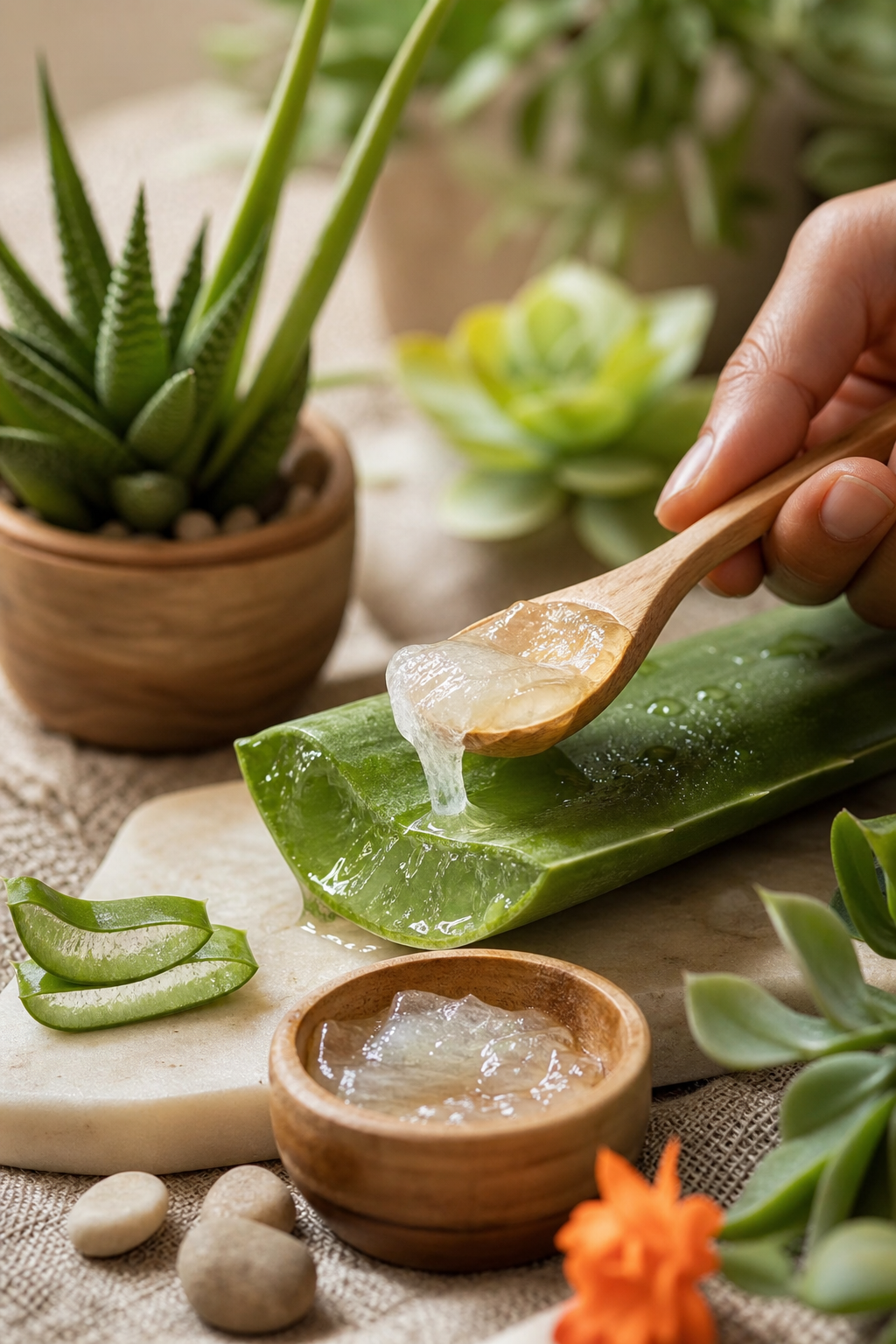
Use fresh gel straight from a leaf, or a pure store-bought gel with no added alcohol or fragrance. Smooth a thin layer on after cleansing and let it sink in before your oil or moisturizer.
Caveat: aloe on its own evaporates faster than oil. In very dry winter air, always seal it with an emollient on top.
6. Occlusive Plant Butters (Shea, Cocoa) Instead of Petroleum Jelly
Plant butters seal the skin like petroleum jelly does, but they add vitamins and fatty acids instead of just blocking water loss. They're the richest natural remedies for dry winter skin on this list.
Best for very dry, cracked hands, feet, and elbows. Shea butter is packed with vitamins A and E plus fatty acids that nourish and protect. Cocoa butter is rich in fatty acids that penetrate deep and form a protective layer that locks moisture in.
An occlusive is a moisturizer that seals the top layer of skin. Shea butter comes from the nut of the African shea tree and has been used for skin care for centuries. The difference from petroleum jelly is what's inside: real plant nutrients, not a refined petroleum byproduct.
You can make a whipped body butter at home. In a YouTube video, Dr. Anshul Gupta shares a blend of melted cocoa butter, coconut oil, and almond oil, whipped once it partly solidifies, with a couple drops of lavender oil for scent. He stresses one rule: don't overheat the butters, since high heat destroys the good fatty acids.
If you want to skip the DIY mess, our plant-based natural body lotions give you the same occlusive nourishment in a ready-to-use formula. Apply butters to slightly damp skin for the best seal.
7. Ayurvedic Remedies: Malai, Multani Mitti, and Masoor Dal
Ayurvedic kitchen remedies treat dry skin from a balance-first view, using milk cream, clay, and lentils to nourish and gently renew. These are some of the most overlooked natural remedies for dry winter skin in Western roundups.
Best for people who want food-grade fixes and a slower, gentler approach. In Ayurveda, dry skin links to excessvata, the dry, cold quality, so the goal is to add warmth and oil back.
- Malai (milk cream): A spoonful massaged into the skin adds fats and lactic acid that soften and hydrate.
- Multani mitti (fuller's earth clay): Better for oily zones, but mixed with rose water it cleans without harsh stripping.
- Masoor dal (red lentil): Soaked and ground into a paste, it gently lifts dead, flaky cells.
In a YouTube video from The Yoga Institute, Dr. Hansaji Yogendra recommendsabhyanga, a self-massage with warmed coconut, almond, or sesame oil before bathing, as the best way to handle winter dryness. She also suggests a soothing pack of fresh aloe gel, honey, and a little sandalwood, once or twice a week.
This Ayurveda-plus-science approach is the heart of how we formulate. Our breakdown of the OM Botanical philosophy shows how herbs like aloe and neem fit modern barrier repair. Caveat: skip clay on already-dry winter faces; it can pull out the little moisture you have left.
8. Milk and Yogurt Masks for Gentle Lactic-Acid Renewal
Milk and yogurt masks gently exfoliate with lactic acid while feeding the skin fats and proteins. They renew dull winter skin without the harshness of scrubs.
Best for flaky, rough texture that makes moisturizer sit on top instead of soaking in. Milk contains lactic acid, a mild natural exfoliant that loosens dead cells. It also has fats and proteins that soothe and soften.
The simplest version: soak a washcloth in cold milk and press it onto dry patches for five to ten minutes, then rinse. For the face, plain yogurt works as a mask, since it has the same lactic acid plus a tightening, brightening effect.
Why use a chemical exfoliant in winter when your skin is already irritated? Removing flaky cells with a gentle acid can actually ease the urge to itch. The key is gentle and infrequent, once or twice a week at most.
If you'd rather use a ready blend, our botanical serums for brightening and hydration pair plant humectants with gentle renewal. Caveat: if you have eczema or open cracks, skip acids entirely until your skin heals.
9. Smart Habits: Humidifiers, Lukewarm Showers, and Hydration
Sometimes the best natural remedies for dry winter skin aren't products at all. They're small habit changes that stop dryness before it starts.
Best for everyone, because no cream can outrun a hot 20-minute shower in a bone-dry house. These basics show up in every dermatologist's winter skin advice for a reason.
Here's what actually moves the needle:
- Run a humidifier. Heating dries indoor air, which pulls water from your skin. A humidifier in your bedroom adds moisture back overnight.
- Take lukewarm, shorter showers. Hot water speeds up water loss the second you step out. Cooler is better.
- Use fragrance-free, alcohol-free cleansers. Strong soaps strip the barrier and sting cracked skin.
- Moisturize on damp skin. Apply within a few minutes of bathing to trap the water.
- Skip scented laundry detergent and dryer sheets. They leave irritants on every shirt you wear.
The same logic applies across the board: use the coolest water you can stand, ditch fragranced products, and apply moisturizer right after the shower to lock water in. For more on building a gentle routine around these habits, the guidance on caring for sensitive skin in winter covers fragrance-free swaps in detail.
10. Eat Your Way to Hydrated Skin: Antioxidant-Rich Foods
What you eat in winter shows up on your skin. Foods rich in healthy fats and antioxidants help your skin hold moisture and repair its barrier from the inside.
Best for chronic dryness that topical fixes never fully solve. Omega-3 fish like salmon strengthen your skin's barrier and cut inflammation, while avocados deliver healthy fats and vitamins C and E.
A few more worth adding to your plate:
- Nuts and seeds: Almonds, walnuts, and chia bring vitamin E and zinc for skin repair.
- Sweet potatoes: Beta-carotene supports cell turnover and acts as a natural barrier.
- Leafy greens and citrus: Vitamins A and C drive collagen and protect against oxidative stress.
- Water-rich produce: Cucumber, celery, and watermelon help keep you hydrated.
Stay hydrated, too. Drinking plenty of water throughout the day supports your skin, and a squeeze of lemon adds vitamin C. Caveat: diet works slowly. You'll see changes over a few weeks, not overnight, so pair it with your topical remedies.
How to Pick the Right Natural Remedy for Your Skin
Not every remedy fits every skin type or every body part. The fastest way to choose is to match the remedy to your main problem and how dry your skin actually is. A good moisturizer for winter should layer a humectant (pulls water in) under an emollient or occlusive (seals it in), a structure backed by ingredient checklists for dry, sensitive skin.
Use this grid to narrow it down fast.
Whatever you pick, patch test a new ingredient on your inner forearm and wait 48 hours. If it stays calm, it's likely safe for your face. For help reading labels, our guide on choosing a microbiome-friendly moisturizer shows what to look for and what to skip.
Frequently Asked Questions
What is the fastest natural remedy for dry winter skin?
Applying a plant butter or cold-pressed oil to damp skin right after a lukewarm shower is the fastest fix. The water on your skin plus a sealing layer of shea butter, coconut, or jojoba traps moisture before it evaporates. For itchy, inflamed skin, an oatmeal bath calms it within one soak. Pair any remedy with a humidifier overnight for quicker relief.
Is petroleum jelly or a plant butter better for winter skin?
Plant butters like shea and cocoa are the better choice for most people. Both seal the skin and slow water loss, but plant butters add vitamins A and E and fatty acids that nourish the skin, while petroleum jelly only blocks moisture loss. If you want active barrier repair instead of a passive seal, reach for a plant butter or a microbiome-friendly cream.
Can you really fix dry skin with food you eat?
Yes, but slowly. Foods rich in omega-3s, vitamin E, and antioxidants, like salmon, avocado, nuts, and leafy greens, strengthen your skin barrier and help it hold moisture from the inside. You'll usually notice changes over a few weeks, not days. Diet works best alongside topical remedies and good hydration, not as a replacement for them.
How often should I exfoliate dry winter skin?
Once or twice a week at most, using a gentle lactic-acid source like milk or yogurt. Light exfoliation removes flaky cells that trap dryness and cause itching, but overdoing it irritates already-stressed winter skin. If you have eczema, open cracks, or stinging, skip exfoliation entirely until your barrier heals. Always follow exfoliation with a moisturizer.
Why does my skin get drier in winter even with moisturizer?
Cold air holds less moisture, so it pulls water out of your skin faster than a basic moisturizer can replace it. Indoor heating makes it worse. If your cream sits on top without soaking in, your barrier may be damaged. Switch to a humectant-plus-emollient routine, moisturize on damp skin, and run a humidifier to slow the water loss.
The Bottom Line on Winter Skin
Your skin isn't broken in winter. It's just losing water faster than it can hold it, and most of the fixes are simple, plant-based, and already within reach. If you only change one thing, start sealing damp skin with an oil or butter right after every shower. For a barrier-first routine that does the work for you, browse our plant-based face moisturizers and pick one matched to your skin type.
Share