












How to Stop an Itchy Scalp Without Sulfates: A Step-by-Step Ayurvedic Routine
An itchy scalp is one of the most common - and most misunderstood - complaints in hair care. Most people reach for a stronger shampoo, a clarifying treatment, or an anti-dandruff product with aggressive actives. Then the itch comes back worse a few days later. The reason is simple: the itch is usually a sign of a damaged scalp barrier, and harsh surfactants keep damaging it.
This guide walks you through a step-by-step, scalp-first routine built around sulfate-free, aloe-based cleansing and Ayurvedic botanicals. It is designed for sensitive skin, for anyone who has ever been told their flaking is "just dandruff," and for anyone who wants the itch to stop without stripping their scalp in the process.
Why Your Scalp Itches in the First Place
Your scalp is skin - thinner, more sebaceous, and more richly supplied with nerve endings than most of your body. Its barrier is a thin film of sebum, ceramides, and beneficial microorganisms that keeps moisture in and irritants out.
When that barrier is compromised, three things happen at once:
- Water escapes, so the skin dries, tightens, and micro-cracks.
- Irritants get in, so nerve endings fire and you itch.
- The microbiome shifts, and flaking, redness, and irritation follow.
Common barrier breakers include hot water, frequent washing with harsh detergents, fragrances, essential oil overload, styling buildup, hard water minerals, and stress. Cold, dry weather and seasonal heating make all of it worse.
Why Sulfates Can Make an Itchy Scalp Worse
Sulfates - commonly sodium lauryl sulfate (SLS) and sodium laureth sulfate (SLES) - are anionic surfactants. They are extremely effective at grabbing oil and lifting it off the scalp, which is exactly why they are in so many shampoos. The problem is that they do not distinguish between the oil you want gone and the lipids your barrier needs.
For most people with an oily scalp and no sensitivity, that is tolerable. For someone with an already-compromised scalp, sulfate cleansing creates a cycle: the barrier is stripped, the scalp overproduces oil to compensate, irritation builds, and the itch returns. This is why switching to a gentle cleanser is the single highest-leverage change most itchy-scalp sufferers can make.
If you have been searching for an itchy scalp sulfate free shampoo, the good news is that the category has matured well beyond the "gentle but doesn't clean" era. Modern aloe-based formulas cleanse effectively while leaving the barrier intact.
What to Look For in a Sulfate-Free Shampoo for Itchy Scalp
Not every sulfate-free product is a good choice for a reactive scalp. Read the label for:
- An aloe or other soothing base rather than plain water and surfactants.
- No sulfates (SLS, SLES) and no sulfosuccinate overload that mimics the same stripping effect.
- Calming actives such as tea tree, colloidal oatmeal, willow bark, and licorice root.
- A short, transparent ingredient list - fewer fragrance and preservative triggers.
- No silicones or heavy film-formers that trap buildup against an irritated scalp.
Ayurvedic shampoo traditions are a useful filter here, because the classic formulas were built around botanicals - aloe, amla, neem, and herbal infusions - long before synthetic detergents existed. That is the philosophy behind OM Botanical's Soothing Ayurvedic Shampoo, a sulfate-free, aloe-based wash designed to calm scalp irritation while strengthening roots.
A Step-by-Step Ayurvedic Routine for an Itchy Scalp
Step 1: Diagnose the Itch Before You Treat It
Before changing products, identify the pattern. Ask yourself:
- Is the itch constant, or does it spike after washing? (Reactive to cleansing.)
- Is there visible flaking at the hairline, or only under the hair? (Barrier vs. buildup.)
- Does it flare with stress, weather, or certain products? (Trigger-driven.)
- Is there pain, weeping, crusting, or spreading hair loss? (See a professional.)
The answers tell you whether you are dealing with dryness, product buildup, seborrheic dermatitis, or a contact irritation - and they shape how aggressively you should cleanse.
Step 2: Drop the Temperature
Wash with lukewarm water, not hot. Heat dissolves barrier lipids faster than any shampoo ingredient. If you love a hot shower, at least rinse your hair and scalp cool at the end.
Step 3: Pre-Treat the Scalp, Not the Hair
Once or twice a week, before washing, apply a soothing scalp treatment directly to the scalp - not the lengths. Look for tea tree oil, colloidal oatmeal, willow bark, and activated charcoal, which together calm itching and lift flakes without abrasion. OM Botanical's Dry Scalp & Flake Remedy is built on exactly this combination and is gentle enough for eczema-prone and psoriasis-prone scalps.
Massage it in with fingertips - never nails - and let it sit for five to ten minutes.
Step 4: Cleanse Gently and Deliberately
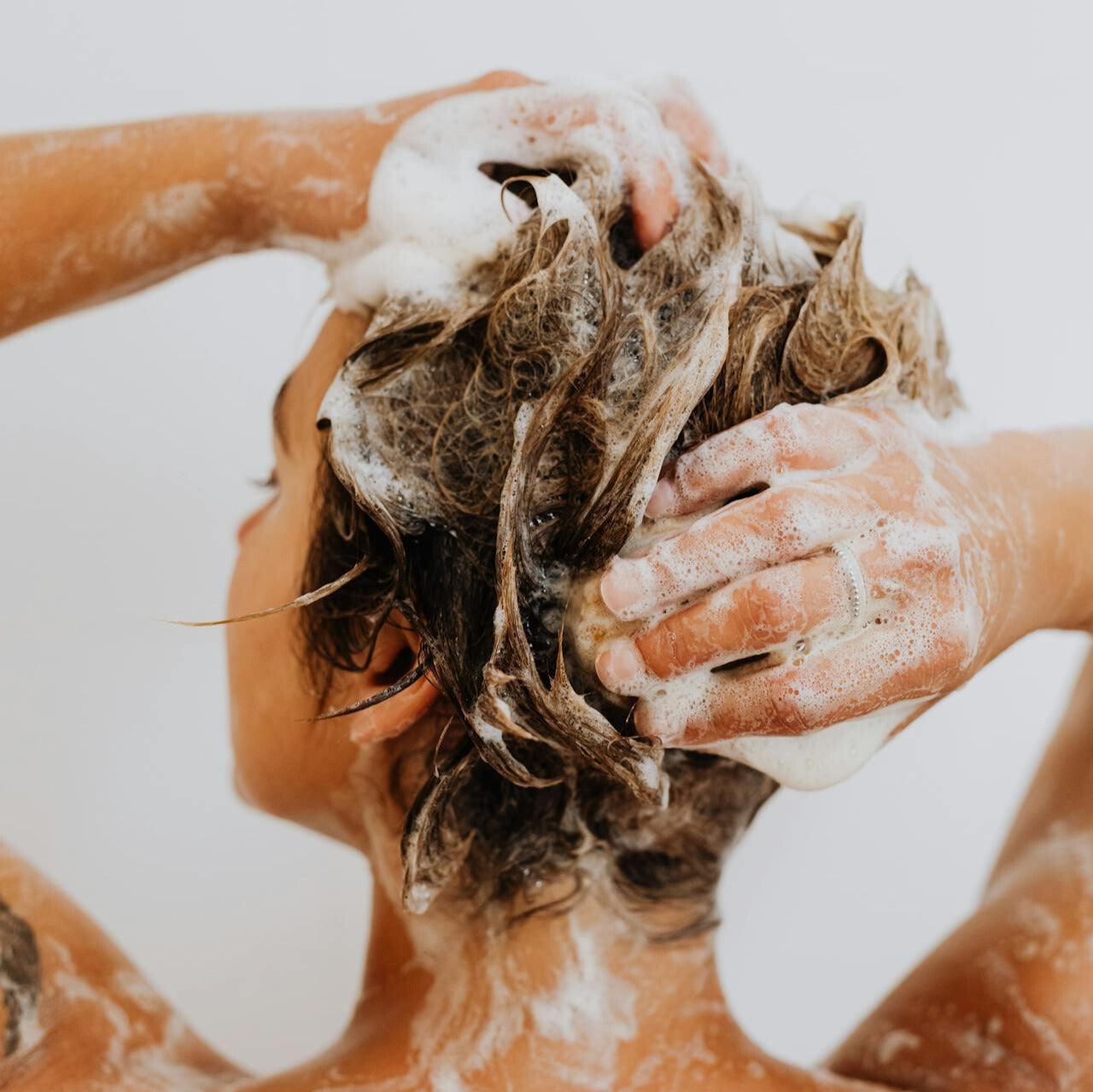
Apply a sulfate-free shampoo to the scalp only, working it in with slow circular motions for a full 60 seconds. Let the runoff cleanse the lengths. Rinse thoroughly; residue from any cleanser is itself an irritant.
If your scalp is very reactive, start with two washes per week and build up. Daily washing is fine for many people - but only with a formula that respects the barrier.
Step 5: Condition the Ends, Protect the Scalp
Apply conditioner from mid-shaft to ends, keeping it off the scalp. Choose a silicone-free Ayurvedic conditioner that hydrates and reduces frizz without coating the scalp in film.
Step 6: Dry With Intention
Do not rub. Blot with a soft towel or cotton tee, then air-dry or use the lowest heat setting. Leaving the scalp damp for hours under a tight style is one of the most overlooked drivers of itch and flaking.
Step 7: Support From the Inside
Hydration, omega-3 fats, adequate protein, sleep, and stress management all show up on your scalp. Ayurvedic practice treats scalp health as systemic, and modern dermatology agrees more than it used to.
Sample Weekly Routine
| Day | Routine |
|---|---|
| Monday | Pre-treat with scalp remedy, then sulfate-free wash + conditioner on ends |
| Wednesday | Sulfate-free wash only |
| Friday | Pre-treat + sulfate-free wash + conditioner |
| Daily | Cool rinse if sweating; blot dry; no tight damp styles |
When to See a Dermatologist
Book an appointment if you have severe pain, open or weeping sores, sudden patchy hair loss, or flaking that does not improve after three to four weeks of gentle, consistent care. An itchy scalp is usually manageable at home - but persistent symptoms deserve a clinical look.
The Takeaway
An itchy scalp is not a hygiene problem to scrub away. It is a barrier problem to rebuild. Swap the harsh surfactants for a sulfate-free, aloe-based Ayurvedic shampoo, pre-treat with soothing botanicals, cleanse deliberately, and dry with intention. Most people notice a meaningful difference within two to three weeks - and the itch stops being the thing they think about every day.
Explore the full OM Botanical hair and scalp range at ombotanical.com to build the routine that fits your scalp.
Share